Let me get straight to the point…Design Perfection
I have seen MING’s before at watch shows, but to unbox one at my own desk is a different experience. It’s stunning. What struck me immediately was the refinement and the cohesiveness of the design. Proportions, lugs, crown, brushing, dial, buckle. The watch looks like a solid, integrated whole. Nothing needs to be added, changed or subtracted. Basically a perfect design!
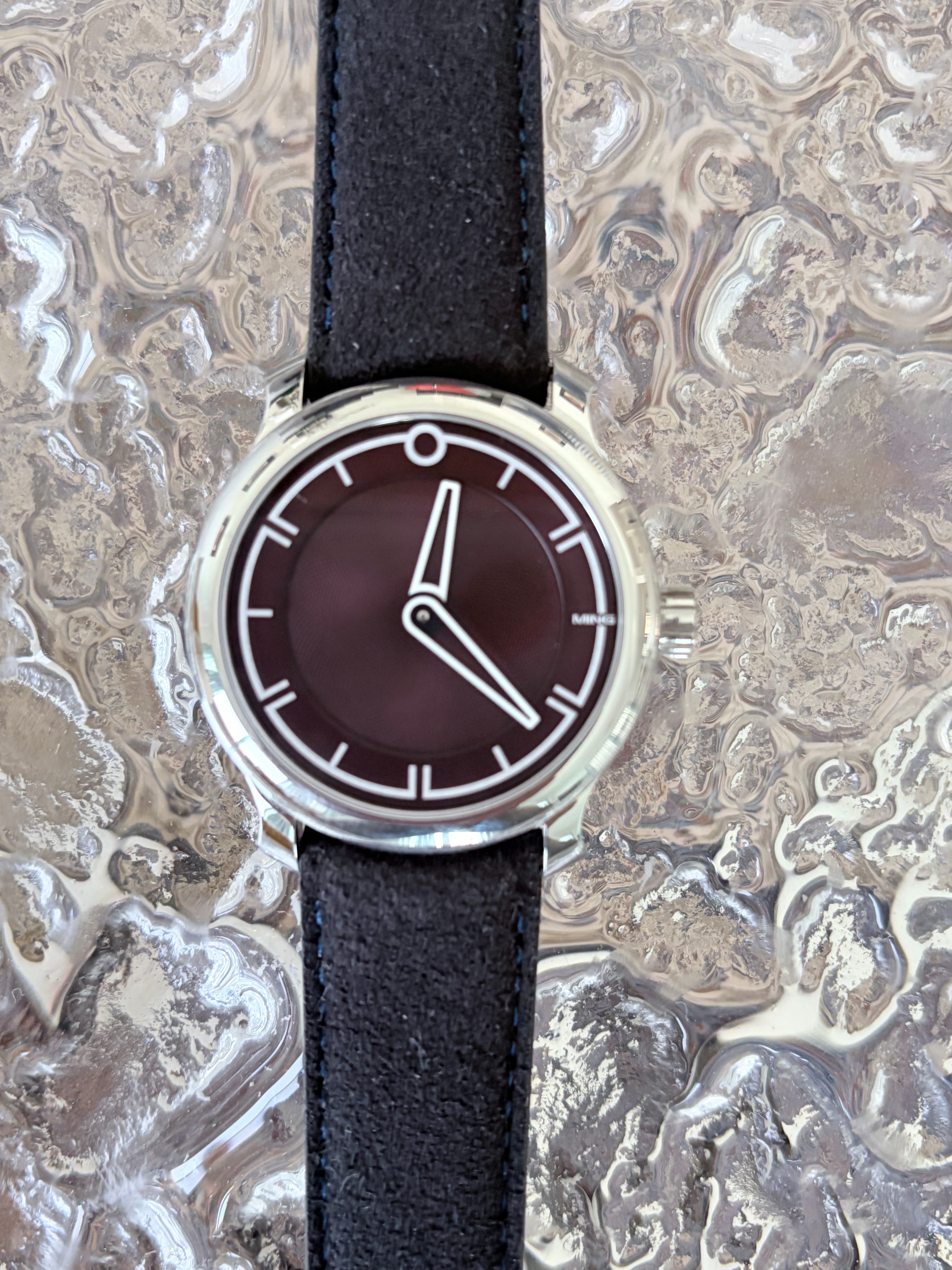
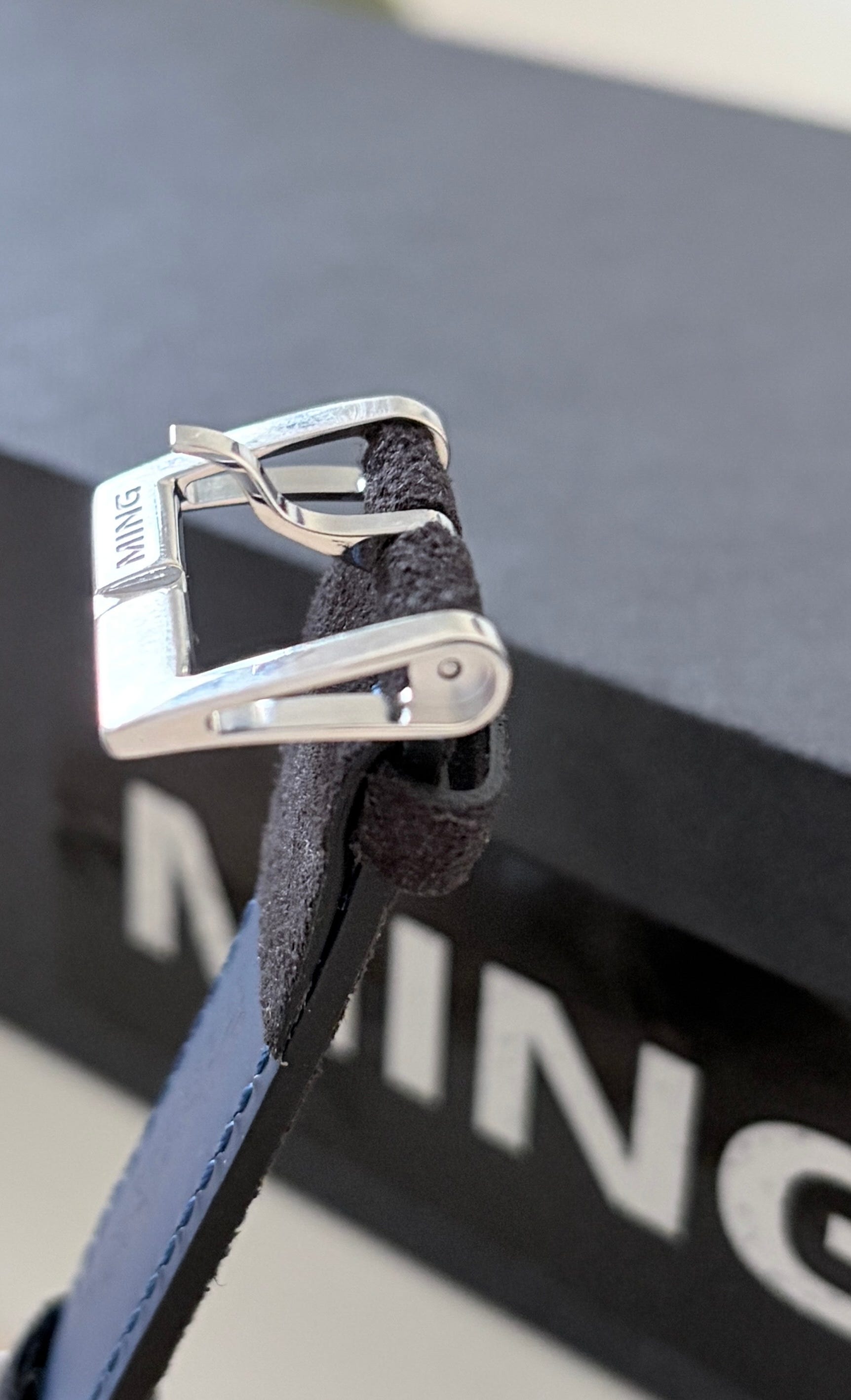
Originally they put the Burgundy’s on a taupe strap - I favor black. More strap talk later.
Quintessentialming
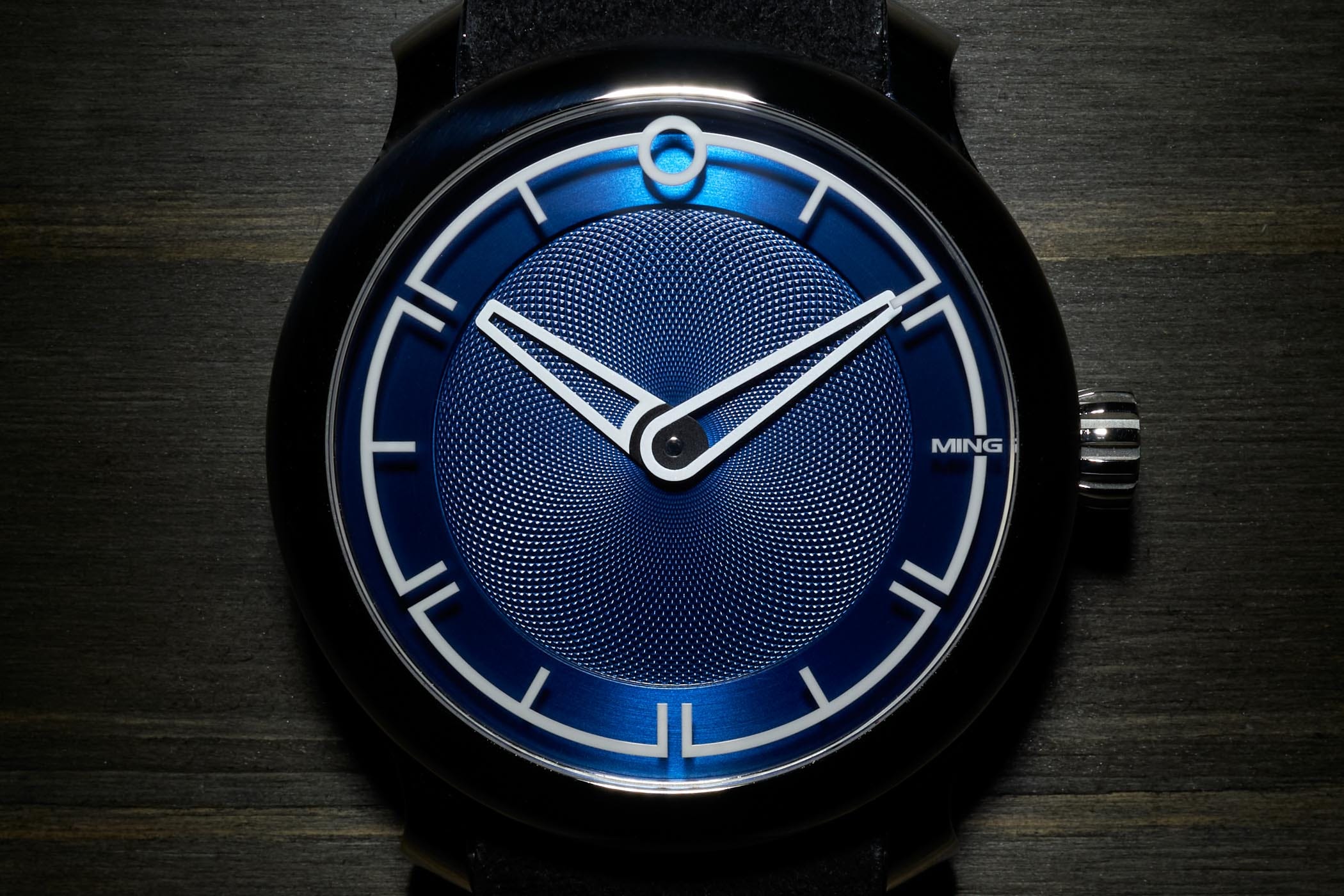
To me, looking through their entire catalogue, this one, the 17.09 shows off the essence of the MING design language. It’s instantly recognizable as a MING. Nothing looks like it. It’s an original. That does not mean there are no other original designs in the catalogue - one of my other favorites, the stunning Model 20.01 Series 3 … …
Creating a ‘unique’ is not a small feat in a world of thousands and thousands of watch designs. My objective in watch collecting is to acquire design icons, think Omega Speedmaster, Breitling Navitimer, Rolex Day-Date, Heuer Monaco, Universal Geneve Tri-Compax. Now, I welcome the MING 17.09. I picked-up the Burgundy simply because I do not have that dial color in my collection. The Blue is stunning as well.
WhatsaMING ?
MING is an independent watch brand, founded in 2017 in Kuala Lumpur (Malaysia) by six watch enthusiasts led by Ming Thein, a photographer, designer and engineer, who also serves as the companies chief creative officer and public face.
The brand’s mission is to make watches that are distinctive and modern without linking back to traditional watch making heritage. Ming’s philosophy centers on a reductive, “design‑first” approach that emphasizes light, form and color, with layered dials, flared lugs and a radial (circular) symmetry. They use externally manufactured movements.
Their watches are produced in small batches using a mix of precision CNC machining, laser‑based techniques and advanced finishing to achieve tight tolerances and a refined aesthetic.
Dials involve complex steps such as machining sapphire substrates, laser‑engraving, metallization, and multi‑layer Super‑LumiNova filling. The aim is to let light create depth and a multifaceted effect.
Before we continue about the watch, I wanted to spend some time highlighting one of MING’s key design characteristics, the hour and minute hands.
Evolution of MING Hands
The evolution of MING hour and minute hands has been a journey toward improved legibility, bold design and the establishment of a distinct brand signature—moving from traditional filled hands to specialized, luminous, and skeletonized hands.
Core Design Principles:
Luminosity: Almost all MING hands are designed to be “bright hands,” featuring extensive Super-LumiNova filling.
Minimal Parallax: The hands are placed very close to the dial, typically with a 0.3mm clearance to the crystal underside.
Skeletonization: The skeletonized, flared-tapered shape is designed for legibility and aesthetic lightness, allowing the dial to remain visible underneath.
Equalization: The hour and minute hands are often nearly equal in length to enhance visual balance
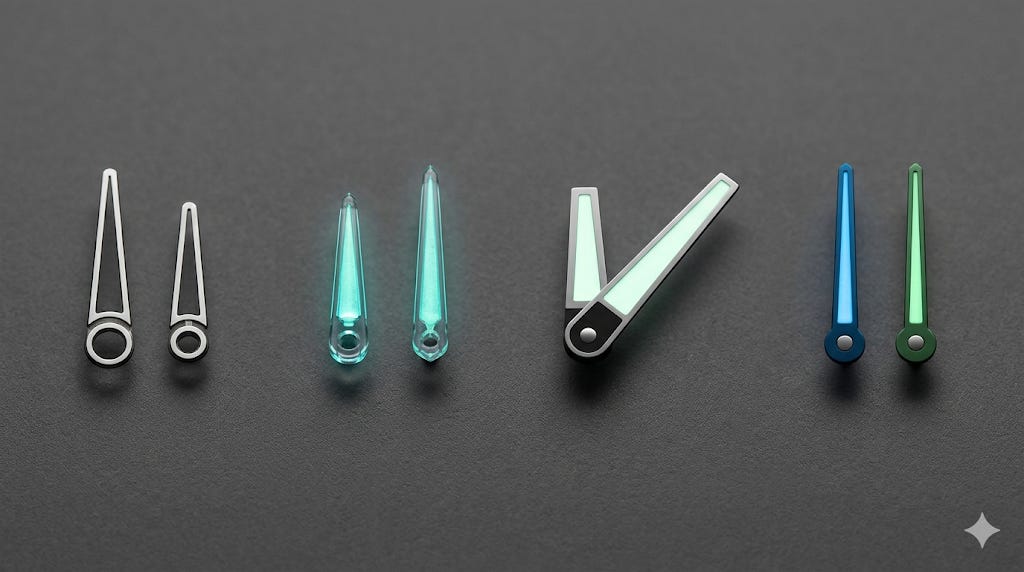
…. after a little creative use of AI, I managed to isolate these from various MING reviews
First Generation (17.01, 17.03): The earliest watches featured simple, tapered, and polished hands with a standard aesthetic. The shuriken-style hour hand made its debut in the 17.03, establishing an early design quirk. Shuriken refers to a Japanese concealed throwing weapon often called a “ninja star”.
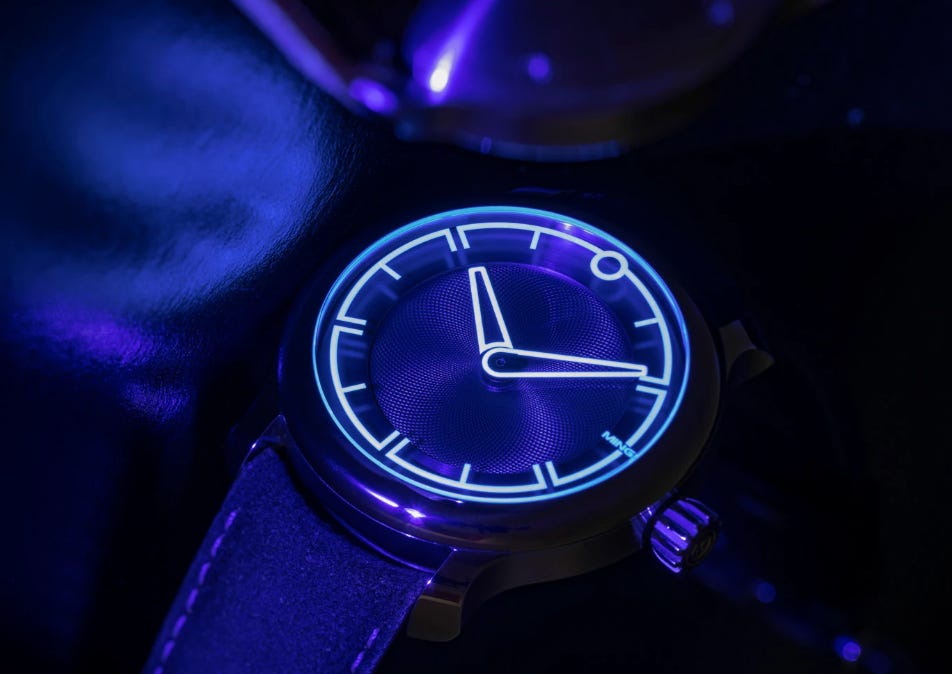
Second Generation Design - “Bright Hands” (18.01, 27.01, 17.06, 17.09): The second-generation brought a major evolution to legibility. MING sought to make the hands bolder and larger, addressing the size differential between the hour and minute hands. To allow for a more balanced aesthetic, they designed hands that were nearly equal in length but easily differentiated by their design. The hands are largely skeletonized and filled with Super-LumiNova, creating a high-contrast luminous signature at night, as seen in the model 17.09. The 17.09 and 27.01 solidified this, with hands designed to sit closer to the dial to minimize parallax error.
Specialized and Experimental Hands (20.01, 29.01, LW.01):
Laser-Etched Sapphire: The MING 29.01 Dubai Edition uses laser-etched sapphire hands filled with HyCeram for superior nighttime visibility.
Chronograph Hands (20.01): The AgenGraphe-powered MING 20.01 Series 3 uses four central mounted hands—minute, hour, and two for chronograph functions—maintaining the signature aesthetic while offering high complexity.
Shuriken Evolution (LW.01): The LW.01 revisits the “shuriken” hour hand from the 17.03, but in totally different implementation, a gradient and skeleton peripheral ring and shortened indices which are a visually ‘lighter’ and skeletonized version of the 37 series.
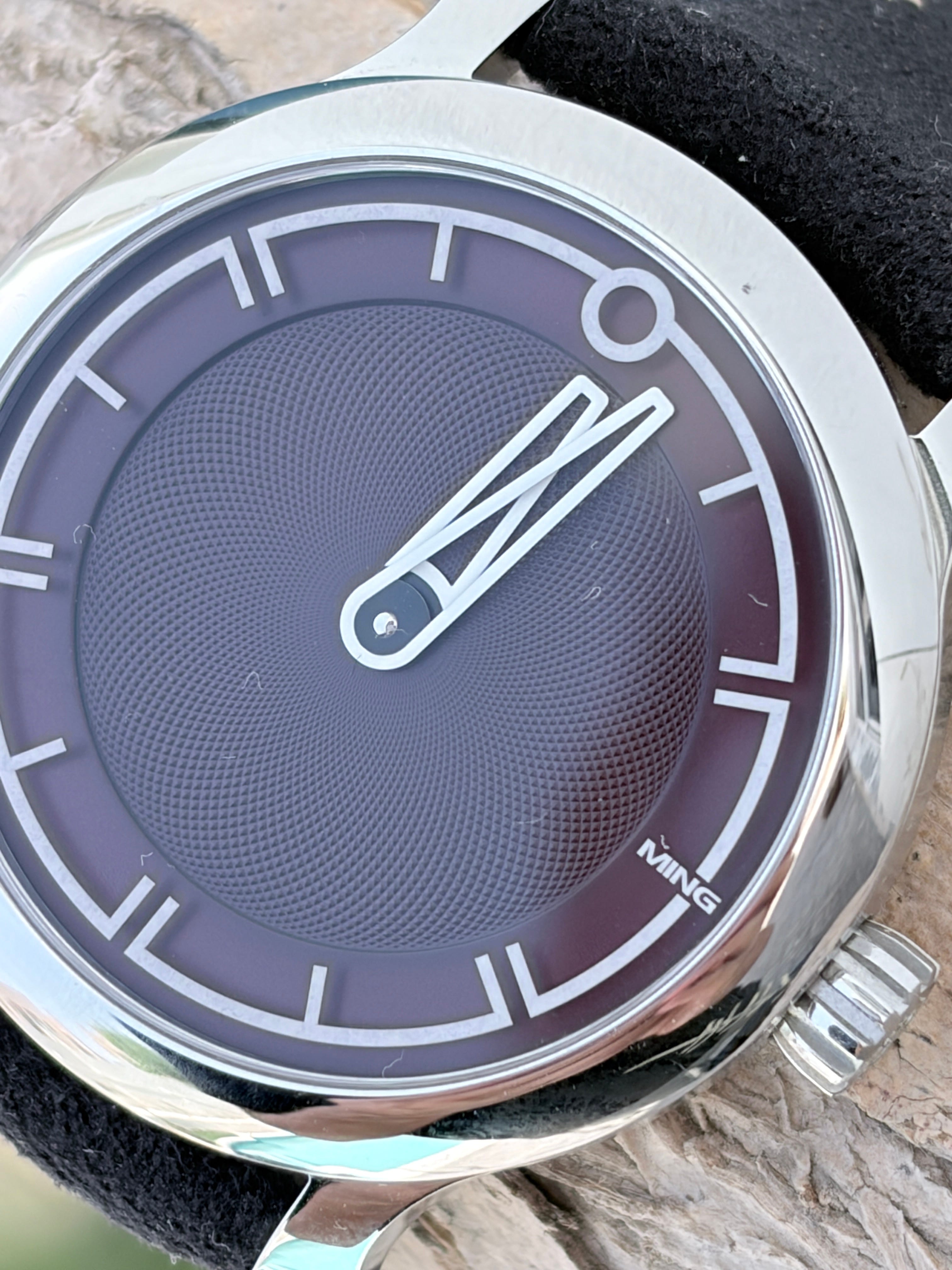
Reference 17.09 Version 2
The 17.09 started life in April 2021, fairly quickly followed-up with version 2.0 which brought enhancements like laser-etched lume indices and lume-filled sapphire glass, a two-piece dial, reprofiled lugs and independent hour hand adjustment.
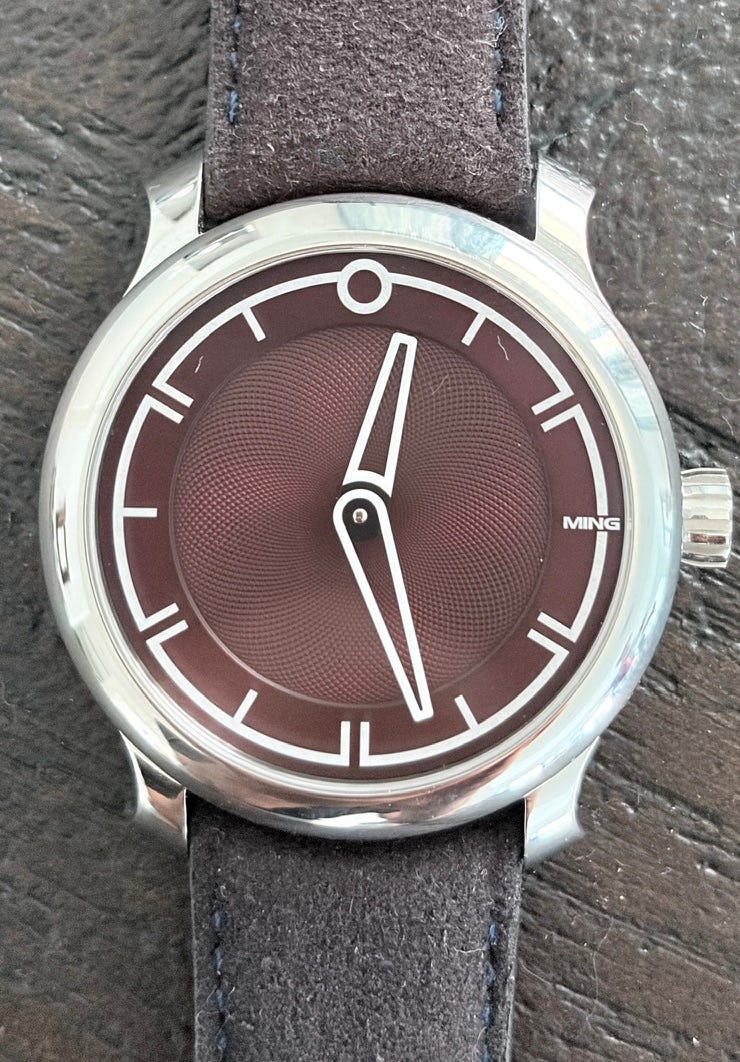
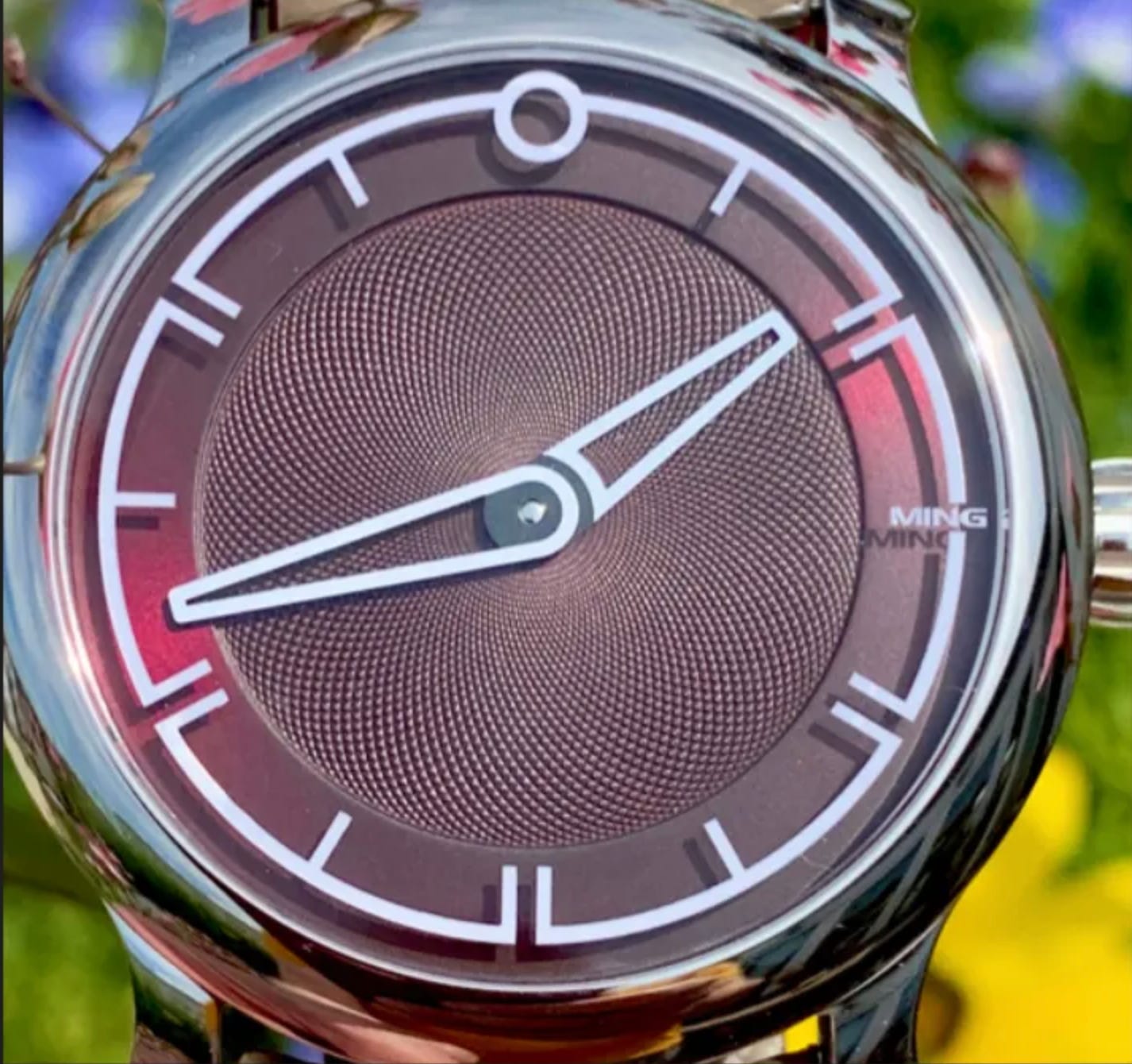
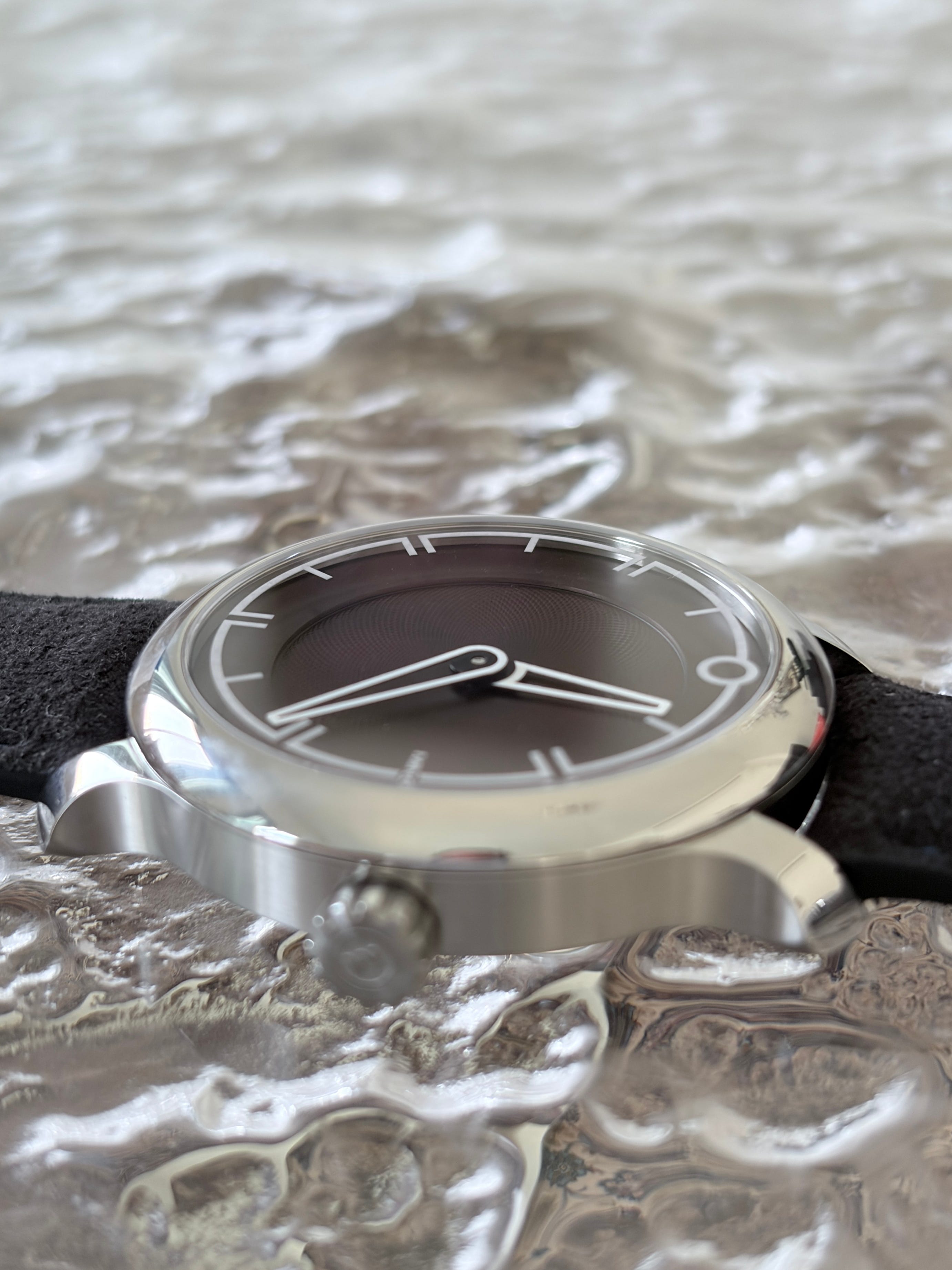
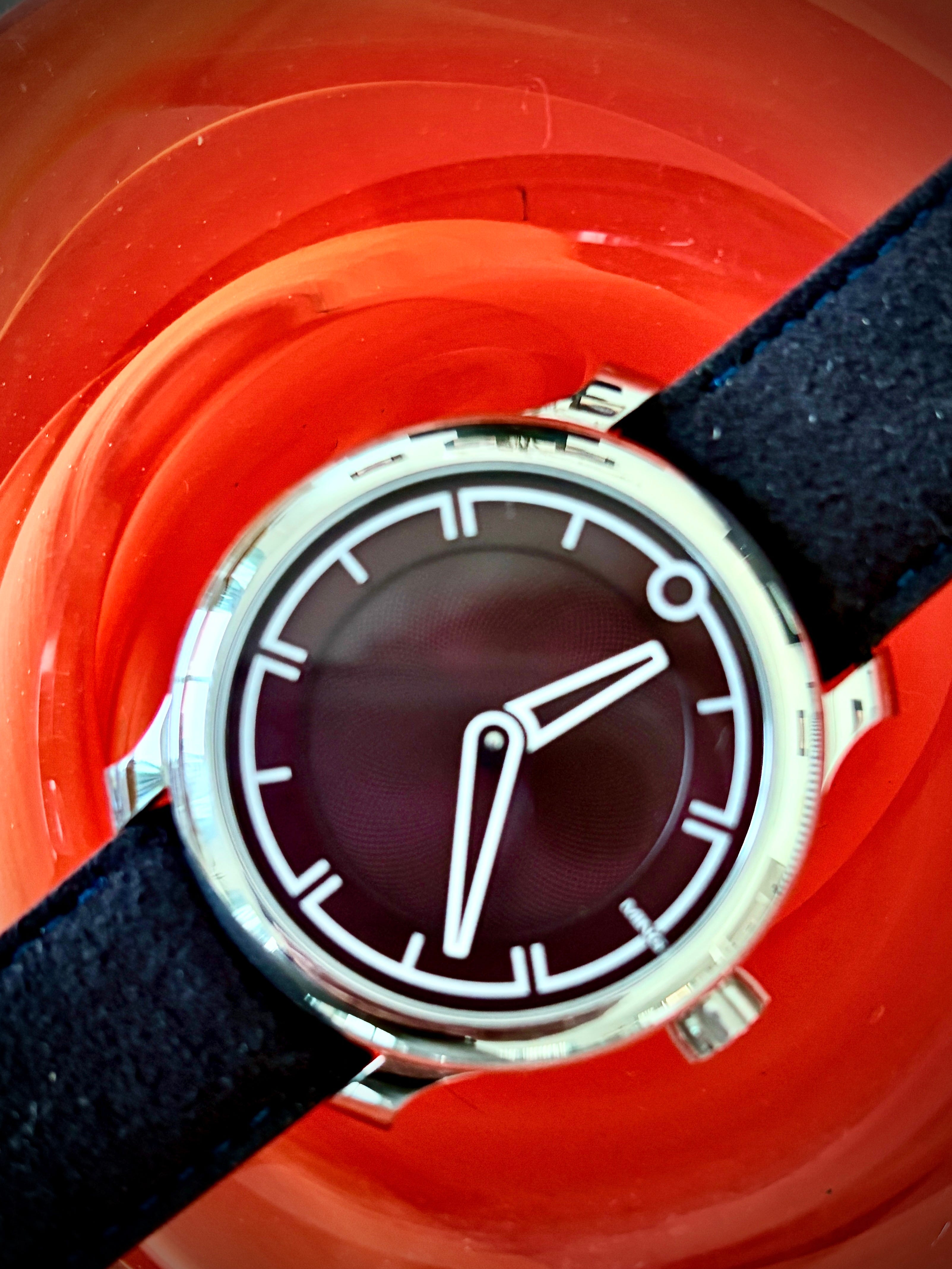
That dial is a two-piece construction with a fine Clous-de-Paris pattern in the center and a circular brushed outer portion. When the light hits the dial it changes the color from brighter reds to deeper maroons. Difficult to capture in photographs. And obviously those distinctively shaped hands play a central role in creating the aesthetic.
MING is renowned for its innovative approach to luminescence, particularly its signature technique of integrating lume directly into laser-etched channels within the sapphire crystal. By milling precise, architectural structures into the sapphire itself - so not on top of the glass - and filling them with high-intensity luminous material, the brand creates a distinct three-dimensional glow that appears to hover or float above the dial. A rather unique approach.
Also note the ‘zero’ at Twelve, a key design hallmark from MING which they use throughout the model range in more or less the same execution.
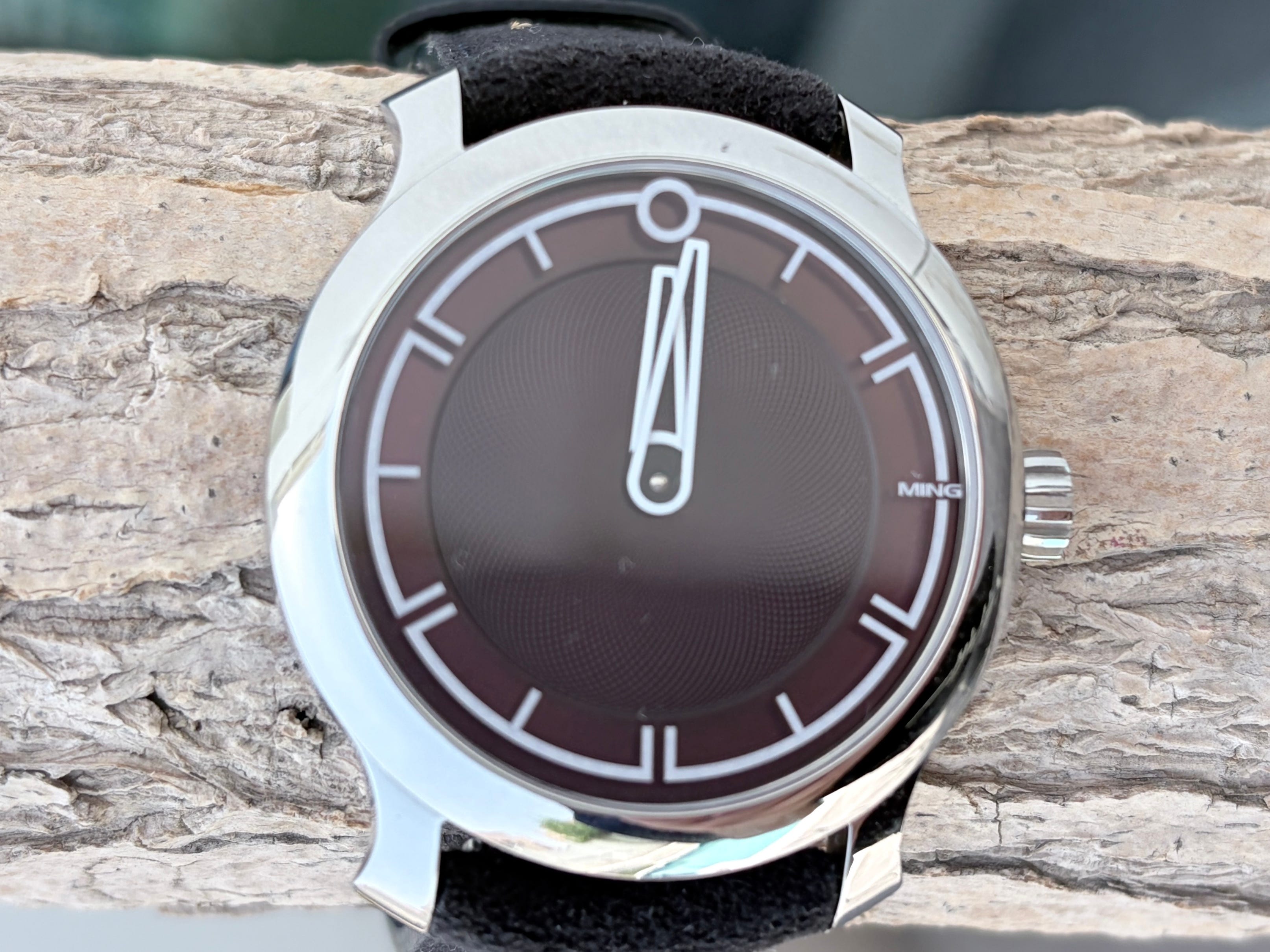
The polished and brushed 316L stainless steel case is a perfect 38mm in size. Note the elegantly designed lugs. The brushing from the case flanks extends through to the underside of the lugs.
The Movement
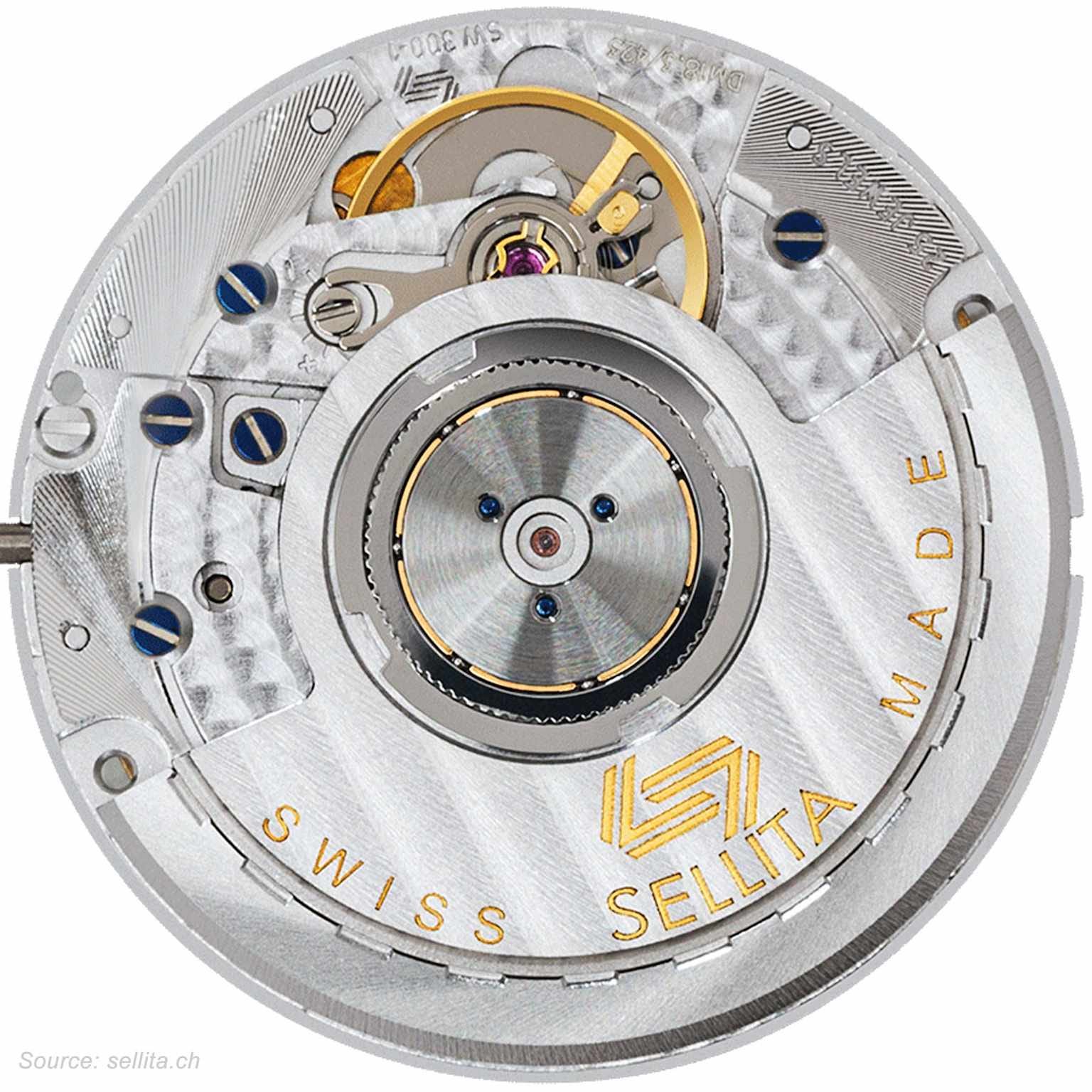
The company uses selected external movements, partnering with Swiss manufacturers such as Sellita, La Joux-Perret, Agenhor and Schwarz-Etienne.
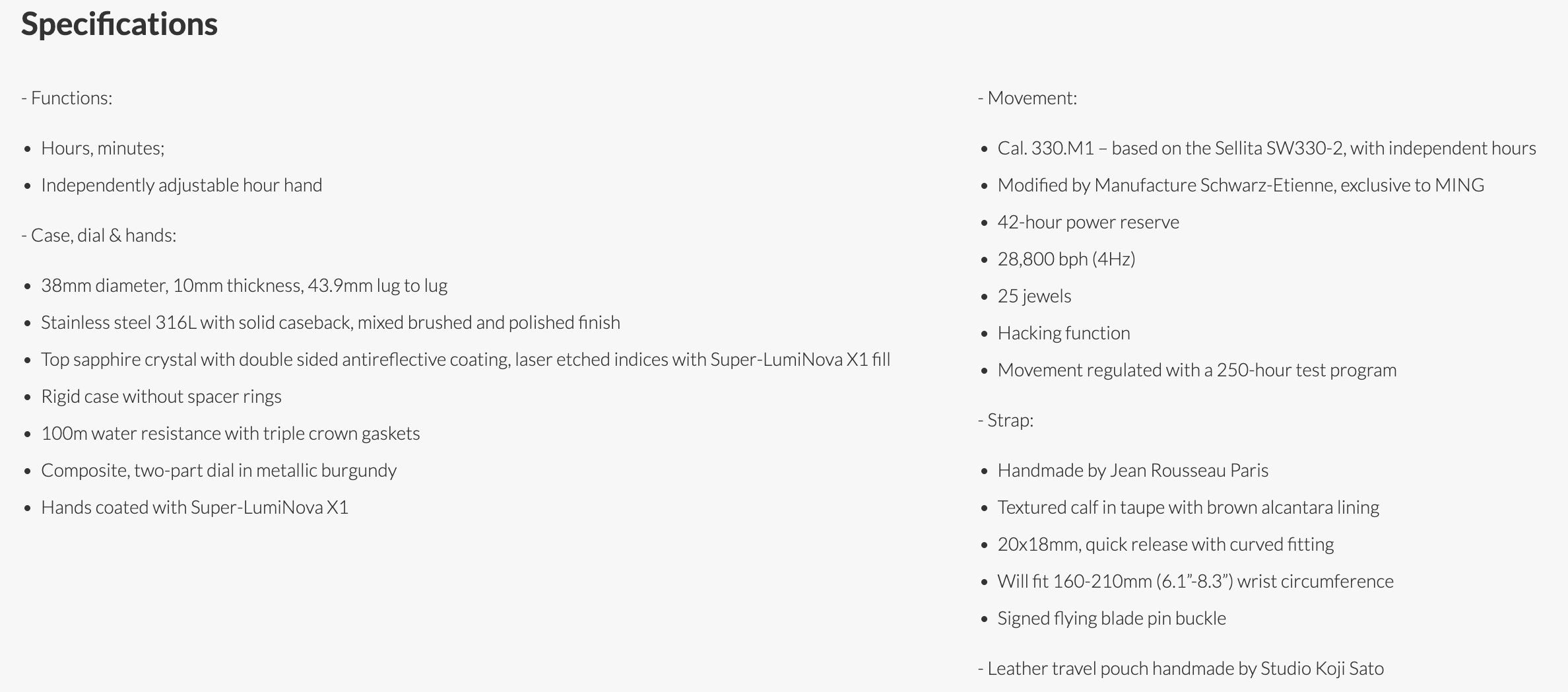
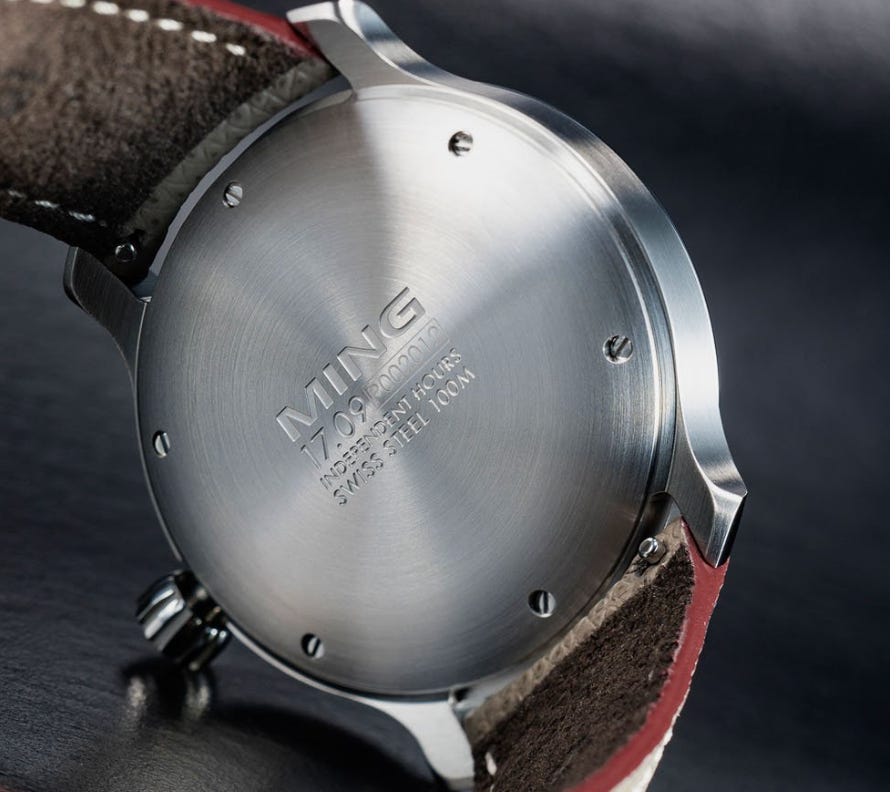
For the 17.09 MING worked with Manufacture Schwarz-Etienne to develop the independent hour hand adjustment mechanism, based on the Sellita SW330-2. This complication and modification is exclusive to MING.
How it works
The crown in its resting position winds the watch. Pull out the crown slightly and the hour hand can be advanced independently of the rest of the gear train, which continues to run. This is useful for quickly adjusting the hour to accommodate daylight savings time as well as different time zones when traveling. Once set you have to reverse the crown one turn to release the mechanism. The third position, where the movement also hacks (ie, the seconds stop running), adjusts both minute and hour hands together.
Mesh
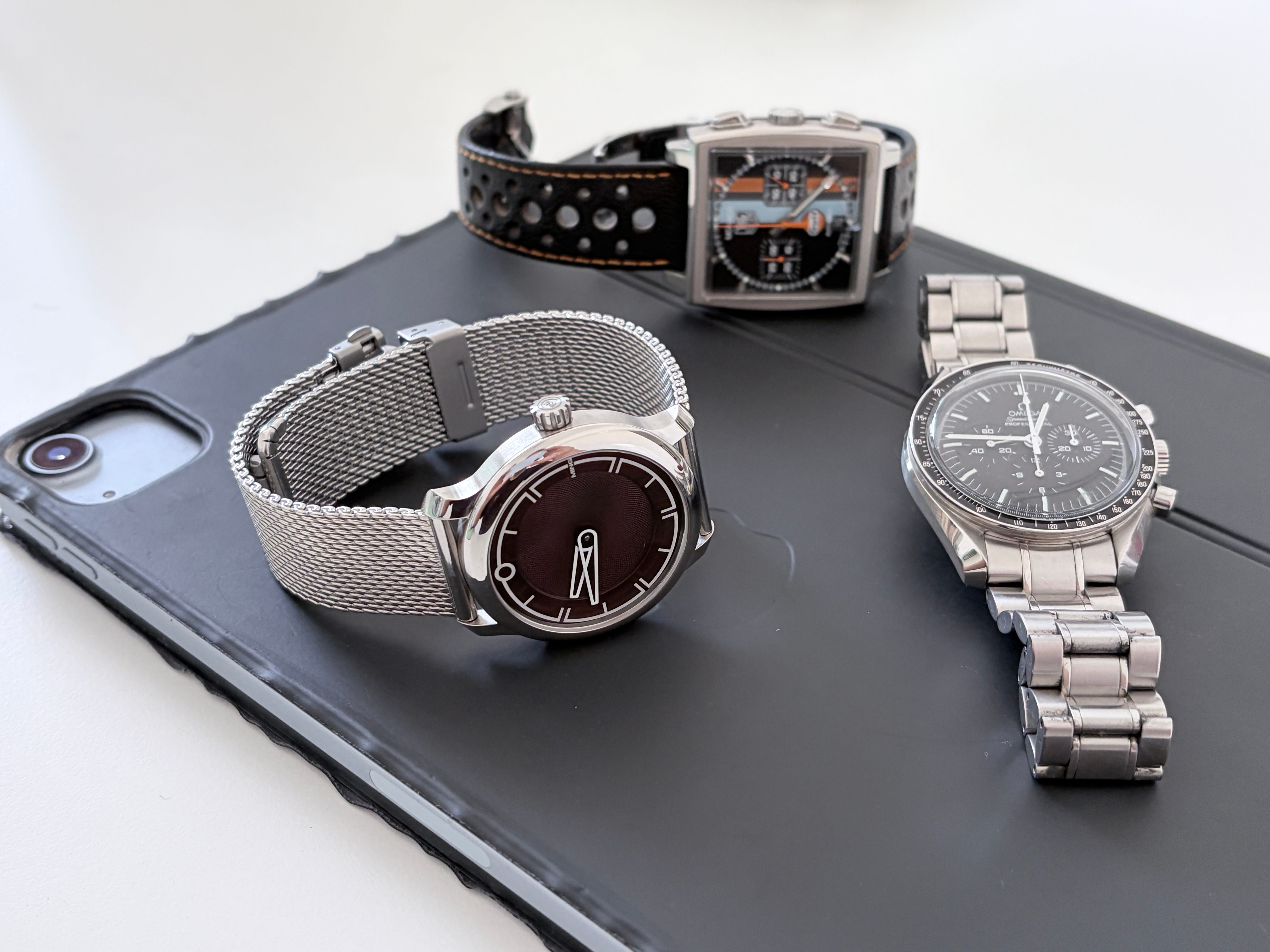
Inspired by MINGS’s own polymesh I thought a mesh bracelet would look nice and given the fact that summers are hot in the UAE, I rather keep the leather strap for later in the year. So I purchased one from Momentum in the USA. Fits like a glove and looks fine to me.
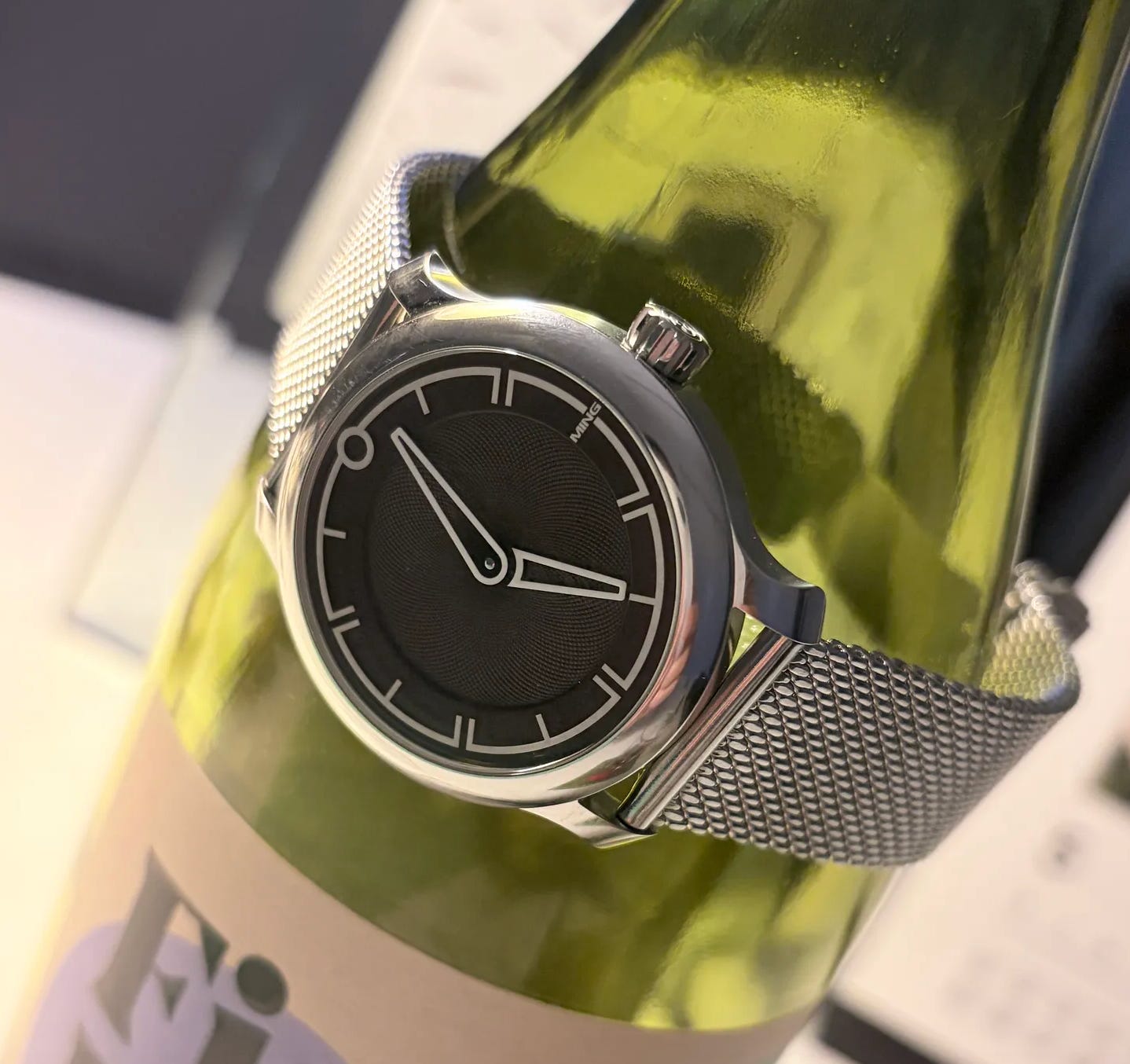
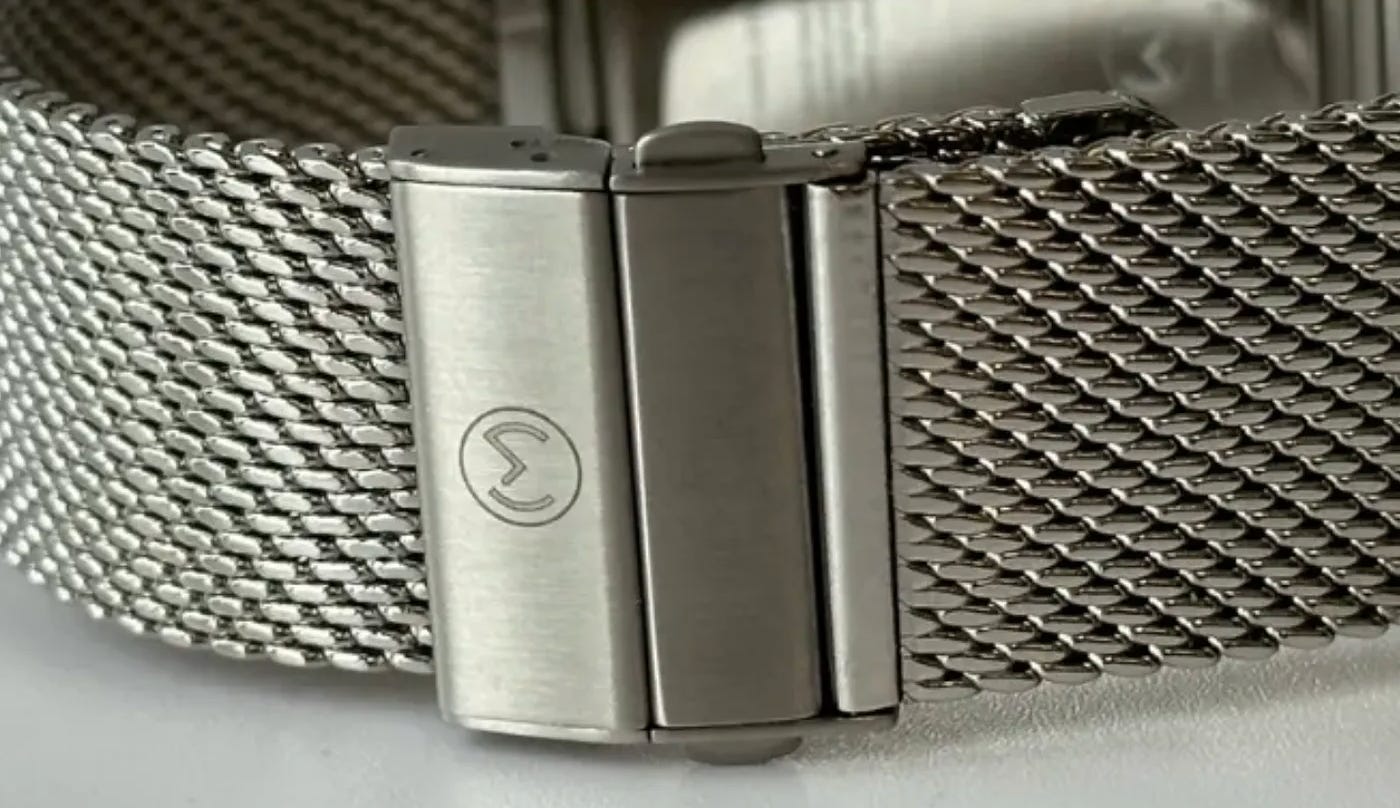
I really like MINGS’s own titanium polymesh but a) it’s rather pricy, and b) I was not sure it would go well with the 17.09 model. Momentum in the US has some very cool bracelets and the ‘M” logo cheekily fits the MING perfectly.
MINGMesh
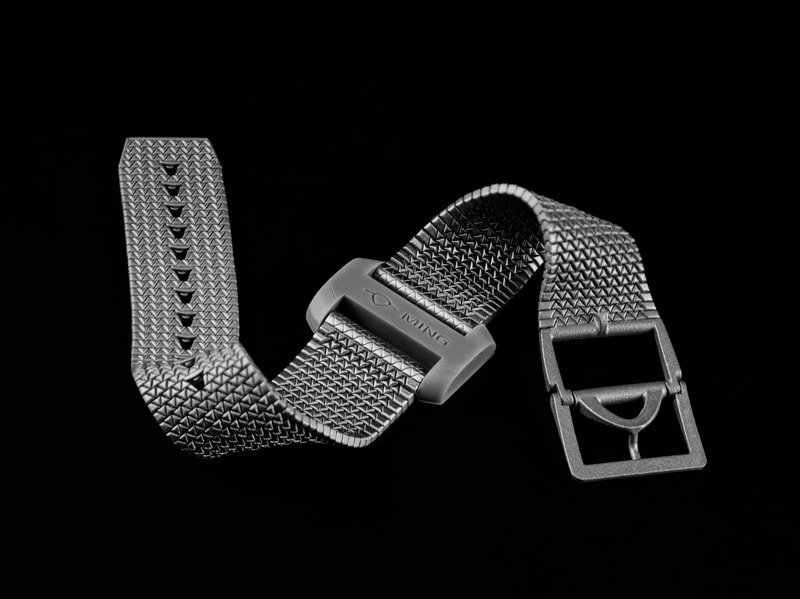
Recently MING created a 3D printed titanium mesh bracelet. As a world’s first it’s worthy of a paragraph here. They used direct‑metal laser sintering (DMLS) which is a process of 3D printing that builds the entire mesh in one continuous piece. The bracelet is then finished to get that smooth look & feel. I saw it at MING’s booth at Dubai Watch Week last year and it’s a marvelous thing to (be)hold.